Why Do You Get Spam Emails and Where Do They Get Your Address
Nine minutes. That’s how long it took for a single email address, posted once in a chat room during an FTC study, to receive its first spam message. Not nine days. Nine minutes. That speed is the part almost no explanation of spam actually conveys, and it tells you something important: your address doesn’t leak slowly. It gets harvested instantly, by systems built specifically to move that fast.
The Five Ways Spammers Actually Find You
Email Harvesting
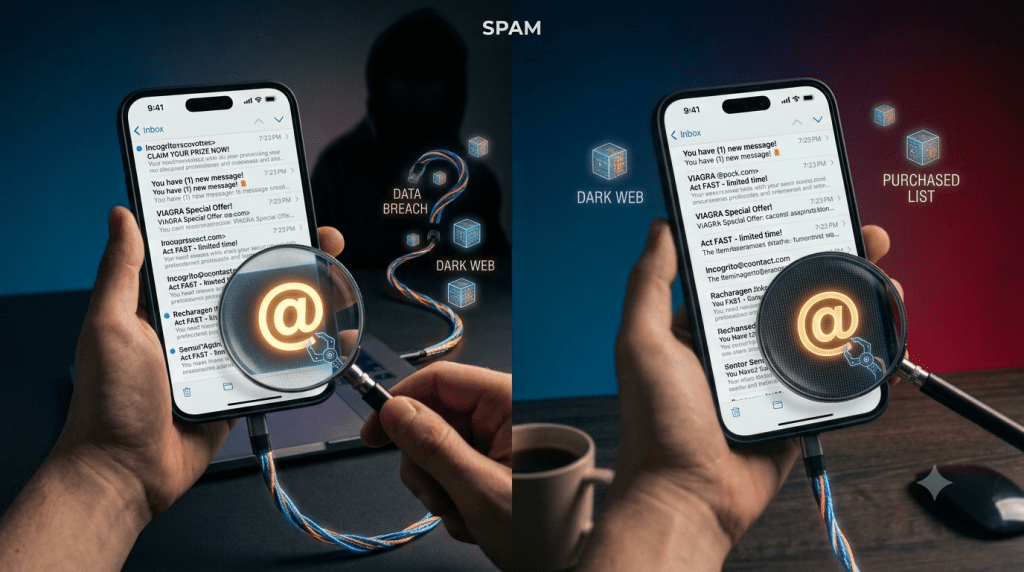
Automated bots crawl the open web looking for the “@” symbol, the one universal marker of an email address, and can pull thousands of addresses from public pages in seconds. Any address sitting in plain text on a website, a forum post, a comment section, gets swept up eventually.
Data Breaches
This is the vector most explanations underweight. When a company gets hacked, Adobe, LinkedIn, Yahoo, and Sony have all had major breaches, the exposed email database gets downloaded and traded. This is far more efficient than harvesting, since every address in a breached database is confirmed active: someone used it to register for a real service.
Purchased Lists
Spammers buy address lists directly from data brokers or other spammers, the same underlying ecosystem covered in what is a data broker. These lists often contain a hidden danger for the buyer, covered below.
Public Postings
Social media profiles, forum signups, comment sections, resumes uploaded publicly, and WHOIS domain registration records all expose an address to anyone looking, human or automated.
Guessing and Dictionary Attacks
Spammers also just guess, generating common name-and-domain combinations, [email protected] patterns, and testing them in bulk against a target domain.
Why Clicking Unsubscribe Can Backfire
This is the single most counterintuitive fact in the whole topic. Clicking “unsubscribe” on a spam email doesn’t necessarily remove you from anything. What it reliably does is confirm, to whoever sent it, that your address is real, actively monitored, and read by an actual person. That confirmation makes your address more valuable, not less, and it frequently gets resold specifically as a “verified active” address to other spammers. On a legitimate mailing list you actually signed up for, unsubscribe works as intended. On an unsolicited spam message from an unknown sender, it can function as free verification you never meant to provide.
Spam traps, sometimes called honeypots, work as the inverse of this problem. ISPs and security researchers seed fake addresses that were never used by a real person, specifically to catch spammers using purchased or scraped lists. If a purchased list contains one of these traps, sending to it flags the sender’s entire operation, which is part of why purchased lists carry real risk even for legitimate marketers who bought one without realizing what was in it.
Bouncebacks for Emails You Never Sent
If you’re suddenly receiving bounceback notifications for messages you never sent, that’s not evidence your account got hacked. It’s address forging: a spammer inserted your address into the “From” field of their own outgoing spam, the digital equivalent of writing someone else’s return address on an envelope they mailed. Your account credentials weren’t compromised. Your address was simply harvested and repurposed as a disguise. This distinction matters, since the fix for a genuinely hacked account, changing your password, does nothing for forging, which happens entirely outside your account.
Why Spam Filters Sometimes Catch Legitimate Email Too
Modern filtering relies on email authentication protocols, SPF, DKIM, and DMARC, technical standards that let a receiving server verify a message actually came from where it claims to. Alongside that, filters weigh sender IP and domain reputation, specific trigger words, and recipient engagement patterns. A legitimate sender with a new domain, imperfect authentication setup, or low historical engagement can land in spam right alongside actual spam, which is why you sometimes can’t easily whitelist a real contact whose messages keep landing in junk.
The Legal Reality: Weak Laws, Weaker Enforcement
The CAN-SPAM Act in the US technically requires consent-based practices around commercial email, and GDPR imposes similar requirements in the EU. In practice, enforcement lags far behind the actual volume of spam, and much of it originates from jurisdictions with little practical anti-spam enforcement at all. Laws exist. They constrain legitimate businesses far more effectively than they constrain the actual spam operations flooding inboxes daily.
How to Actually Reduce Spam
Using a disposable or alias email address for public sign-ups, forum posts, and anything you don’t fully trust keeps your primary address out of the harvesting pool entirely. Don’t click unsubscribe on anything from a sender you don’t recognize; report it as spam instead, which doesn’t confirm your address is active the way unsubscribing does. Checking whether your address has appeared in a known data breach, through a service like haveibeenpwned.com, tells you concretely whether you’re dealing with harvested exposure versus something else. None of this stops spam entirely, since once an address is out, it’s out, but each step meaningfully slows how fast new exposure accumulates.
How This Connects to the Rest of Your Data
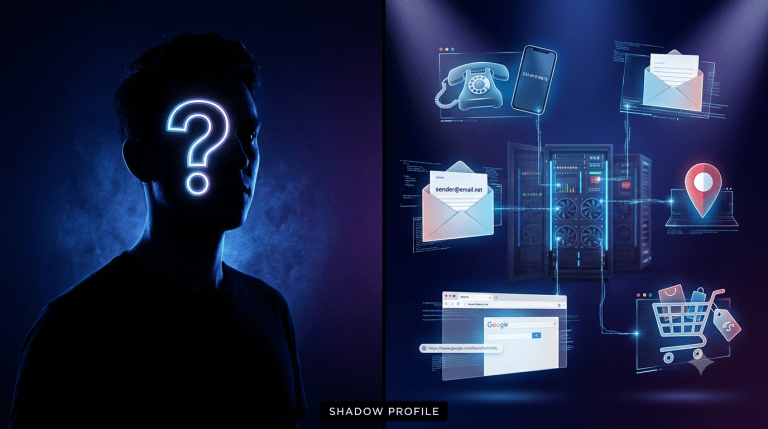
Every piece of this traces back to the same broader ecosystem. Harvested and breached addresses often end up aggregated by data brokers alongside other personal details, feeding the same kind of composite profile covered in what is a shadow profile. And once an address starts receiving legitimate marketing mail too, tracking pixels embedded in those messages report back every time you open one, quietly confirming engagement the same way an unsubscribe click does.
FAQ
Why do I get spam emails, and where did they get my address?
Most commonly from data breaches at services you actually used, automated harvesting of addresses posted publicly online, or purchased lists traded between spammers. See the five sources above for the full breakdown.
Should I click unsubscribe on spam emails?
Only if the message came from a sender you actually signed up with. On unsolicited spam from an unknown sender, unsubscribing can confirm your address is active and monitored, making it more valuable to sell rather than removing you from anything.
I’m getting bounceback emails for messages I never sent. Was I hacked?
Probably not. This usually means a spammer forged your address in the “From” field of their own spam, which requires no access to your actual account, just a previously harvested copy of your address.